
Why Biocides Matter: Safeguarding Products, Processes & People
September 5, 2025 No Comments Microorganisms such as bacteria, fungi,

In the world of paints, coatings, adhesives, and other water-based formulations, microbial contamination is a constant threat. During storage, bacteria, fungi, and yeasts can grow inside containers, leading to foul odor, discoloration, viscosity loss, and even total product failure. This is where In-Can Preservatives play a vital role.
In-Can Preservatives are specialized chemicals added to water-based products during manufacturing to protect them from microbial growth throughout storage and shelf life. They prevent bacteria and fungi from spoiling formulations while the product remains in its container—hence the term “in-can” preservation.
These preservatives are essential for industries producing waterborne materials, where even small amounts of contamination can cause major product recalls or customer dissatisfaction.
Microbial spoilage in water-based products can cause:
• Unpleasant Odor – due to bacterial activity.
• Gas Formation & Container Swelling – making packaging unsafe.
• Viscosity Changes – leading to poor application and performance.
• Color & Appearance Defects – mold growth, cloudiness, or sedimentation.
• Reduced Shelf Life – products become unusable before their intended lifespan.
In-can preservatives safeguard against these risks, ensuring the product stays stable, safe, and effective from production to end use.
In-can preservatives are broadly classified into formaldehyde-releasing and non-formaldehyde-releasing types:
1. Formaldehyde-Releasing Biocides
• Slowly release formaldehyde to control microbial growth.
• Effective and economical.
• Common in industrial paints, adhesives, and coatings.
2. Isothiazolinone-Based Biocides
• Widely used in modern formulations.
• Includes MIT (Methylisothiazolinone), BIT (Benzisothiazolinone), CMIT (Chloromethylisothiazolinone). OIT, DOIT
• Provide broad-spectrum protection against bacteria and fungi.
3. Non-Isothiazolinone Alternatives
• Designed for regulatory compliance and eco-friendly formulations.
• Examples: Bronopol, DBNPA, IPBC (Iodopropynyl Butylcarbamate).
1. Paints & Coatings – Prevent spoilage of decorative and industrial paints.
2. Adhesives & Sealants – Maintain bonding strength and stability.
3. Printing Inks – Protect from microbial contamination during storage.
4. Detergents & Household Cleaners – Ensure product safety and shelf life.
5. Construction Chemicals – Used in plasters, mortars, and emulsions.
With increasing demand for low-VOC, eco-friendly, and sustainable products, the future of in-can preservatives is moving toward:
• Formaldehyde-free formulations.
• Low-toxicity, biodegradable alternatives.
• Synergistic blends that reduce dosage while enhancing protection.
• Innovative slow-release technologies for long-lasting stability.
In-Can Preservatives are essential for safeguarding water-based products against microbial contamination during storage. They ensure product quality, safety, and customer satisfaction, while helping manufacturers meet global regulations.
As industries shift toward greener, safer biocides, in-can preservation technology will continue to evolve, offering sustainable solutions without compromising performance.
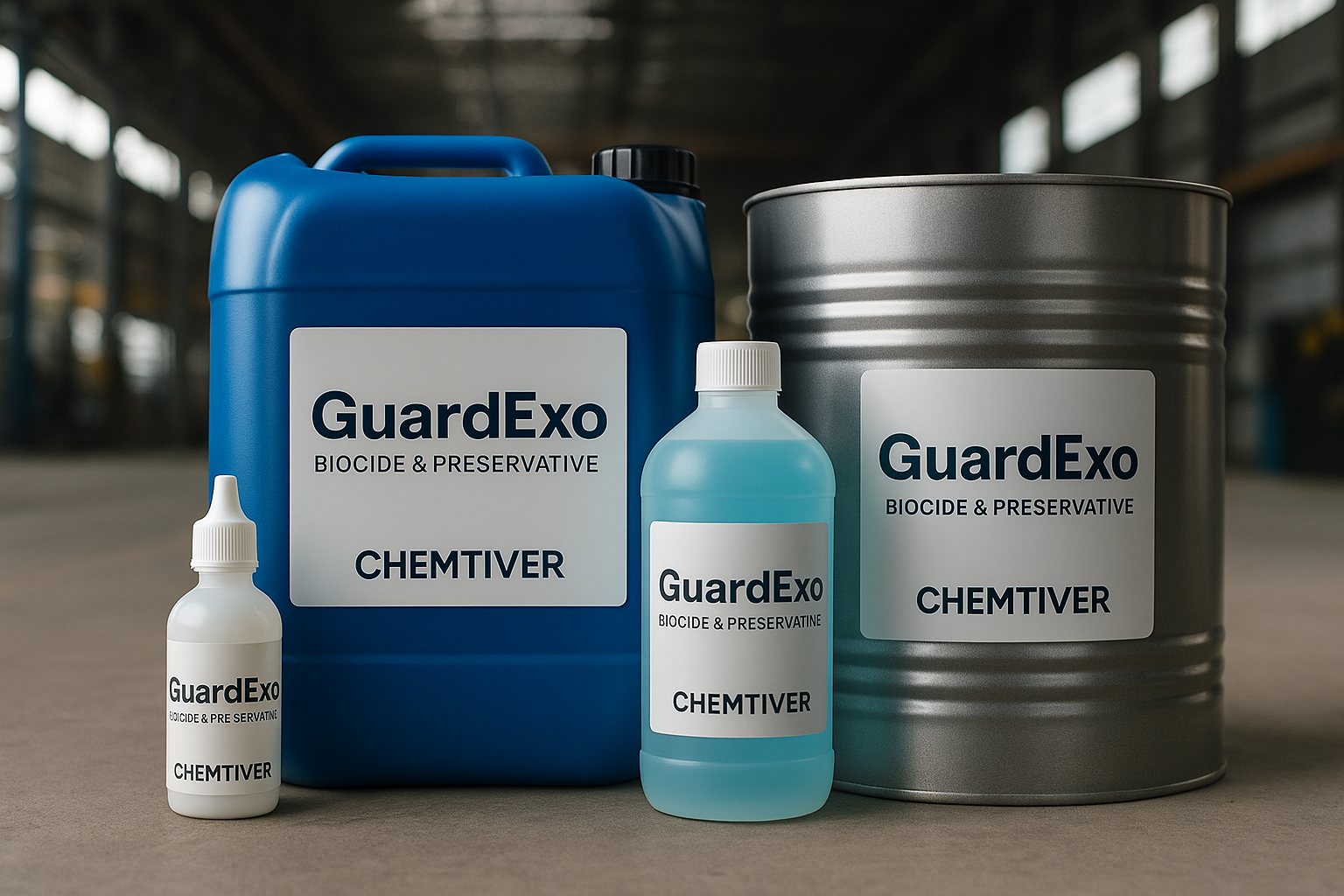
Companies in India like Chemtiver is making biocide and preservatives for all industries. Chemtiver’s biocide brand GuardExo used by many companies worldwide for best in class In can preservatives

September 5, 2025 No Comments Microorganisms such as bacteria, fungi,

September 5, 2025 No Comments Microbial growth doesn’t stop once
September 5, 2025 No Comments Indian chemical manufacturer Chemtiver., headquartered
BiocideHub.com is an independent platform. All biocide brand names, trademarks, and product names mentioned on this website are the property of their respective owners. BiocideHub does not own, represent, or claim affiliation with any third-party brands. Brand names are used strictly for informational and reference purposes only.
Copyright @2026, All Rights Reserved.